





Great store. Will be my favorite in the future. Sent quickly. All items are brand new sealed. And the prices are very nice. Separately, I want to thank Álex Guerra, who controlled my order from start to finish. In general, you are great!!
Thank you for the service. Absolutely top
Great comms. Very helpful and reliable all along
Order placed packaged well, dispatch and delivered promptly Would use again. Thank you
42/5000 the best team, both human and technical
-
 Cómo detectar y cambiar un latiguillo de fibra óptica: caso práctico
Aprende a localizar un fallo en un latiguillo de fibra óptica, qué revisar antes de sustituirlo, cómo elegir el recambio y cómo comprobar que la instalación vuelve a funcionar.
-
 Cómo instalar una antena Dinova en una caravana o autocaravana paso a paso
Aprende a instalar una antena TDT Dinova en una caravana o autocaravana: material, soporte, alimentación, orientación, comprobaciones y errores frecuentes.
-
 Comelit Ultra: qué ofrece esta gama de videoporteros y cuándo elegirla
Descubre qué ofrece Comelit Ultra, qué módulos existen, en qué se diferencia de una solución básica y cuándo tiene sentido para una vivienda, comunidad o edificio.
-
 Mercusys: qué es, si es buena marca y qué solución WiFi elegir
Mercusys es una marca especializada en equipos de conectividad para hogares y pequeñas oficinas. Su catálogo incluye routers WiFi, repetidores, sistemas WiFi Mesh Halo, dispositivos 4G y 5G, adaptadores, soluciones Powerline y switches. La marca suele [...]
-
 Cómo conseguir mejor cobertura WiFi según tu casa, negocio o instalación
La mala cobertura WiFi no siempre significa lo mismo. En una vivienda puede aparecer en una habitación lejana, en una planta superior o en una zona con muchos obstáculos. En un negocio o una pequeña oficina, [...]
-
 Cómo configurar un TP-Link TL-WA854RE con el ordenador y sin WPS
Cuando un router no tiene botón WPS o la vinculación automática no funciona, todavía es posible configurar un repetidor WiFi desde el ordenador. Ese es precisamente el caso de muchos usuarios que buscan cómo poner en [...]
-
 Cómo instalar un repetidor WiFi paso a paso y qué comprobar después
Instalar un repetidor WiFi parece una tarea sencilla, pero buena parte de los problemas no aparecen en el momento de enchufarlo, sino después: cuando la cobertura apenas mejora, cuando el equipo se conecta pero la navegación [...]
-
 Guía de compra profesional: EAP615-WALL, EAP610EXT y EAP613
EAP615-WALL, EAP610EXT y EAP613: qué punto de acceso elegir según la instalación Cuando una instalación ya pide un punto de acceso más serio, la siguiente duda no suele ser si hace falta un equipo profesional, sino [...]
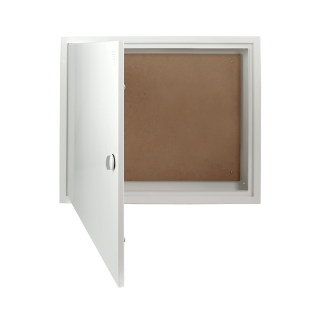
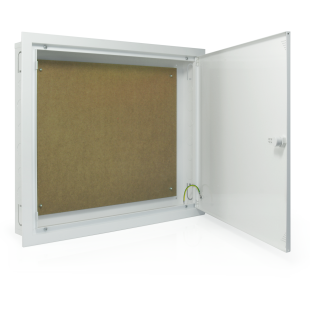
Terminal Enclosures - RTR
Terminal enclosure is a cabinet for ICT (Common Telecommunications Infrastructure), located inside each dwelling.
It collects the necessary elements to provide network connection to each user (PAU).
User Access Point is where the connection between the dispersion network and the user network takes place.
We explain the updated ICT-2 regulations for RTR registers:
Terminal enclosures: ICT2 standard dimensions
New construction installations must comply with the European ICT2 standard:
- Embedded in Partition: 500 x 600 x 80 mm Vertical
- Two adjacent enclosures: 500 x 300 x 80 mm
- Recessed in another element: 300 x 400 x 300 x 300 mm Horizontal
- Independent Services: If we want to separate telephony and broadband from radio and television, two adjacent enclosures are required.
The first enclosure must comply with any of the dimensions already mentioned and the second one a minimum of 300 x 500 mm.
If you have any doubts or queries, you can contact us by e-mail at [email protected],
our technicians will advise you in a personalized way.
What is Terminal Enclosure/PAU? What is it for?
The main function of a Terminal Enclosure is to separate the user network from the community network, distributing the signals inside the house from the User Access Points (UAP)
from the User Access Points (PAU) to each user's outlet (router). They are located inside the house, office or commercial premises and are usually embedded in the wall, collecting inside them the termination of coaxial cable, data cable, telephony and fiber optics. They connect the secondary conduits of the Dispersion Network with the user's interior conduits and allow the user to manipulate the elements inside them.