





Great store. Will be my favorite in the future. Sent quickly. All items are brand new sealed. And the prices are very nice. Separately, I want to thank Álex Guerra, who controlled my order from start to finish. In general, you are great!!
Thank you for the service. Absolutely top
Great comms. Very helpful and reliable all along
Order placed packaged well, dispatch and delivered promptly Would use again. Thank you
42/5000 the best team, both human and technical
-
 Cómo detectar y cambiar un latiguillo de fibra óptica: caso práctico
Aprende a localizar un fallo en un latiguillo de fibra óptica, qué revisar antes de sustituirlo, cómo elegir el recambio y cómo comprobar que la instalación vuelve a funcionar.
-
 Cómo instalar una antena Dinova en una caravana o autocaravana paso a paso
Aprende a instalar una antena TDT Dinova en una caravana o autocaravana: material, soporte, alimentación, orientación, comprobaciones y errores frecuentes.
-
 Comelit Ultra: qué ofrece esta gama de videoporteros y cuándo elegirla
Descubre qué ofrece Comelit Ultra, qué módulos existen, en qué se diferencia de una solución básica y cuándo tiene sentido para una vivienda, comunidad o edificio.
-
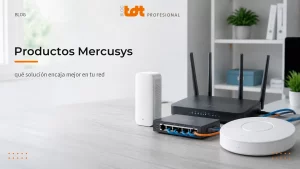 Mercusys: qué es, si es buena marca y qué solución WiFi elegir
Mercusys es una marca especializada en equipos de conectividad para hogares y pequeñas oficinas. Su catálogo incluye routers WiFi, repetidores, sistemas WiFi Mesh Halo, dispositivos 4G y 5G, adaptadores, soluciones Powerline y switches. La marca suele [...]
-
 Cómo conseguir mejor cobertura WiFi según tu casa, negocio o instalación
La mala cobertura WiFi no siempre significa lo mismo. En una vivienda puede aparecer en una habitación lejana, en una planta superior o en una zona con muchos obstáculos. En un negocio o una pequeña oficina, [...]
-
 Cómo configurar un TP-Link TL-WA854RE con el ordenador y sin WPS
Cuando un router no tiene botón WPS o la vinculación automática no funciona, todavía es posible configurar un repetidor WiFi desde el ordenador. Ese es precisamente el caso de muchos usuarios que buscan cómo poner en [...]
-
 Cómo instalar un repetidor WiFi paso a paso y qué comprobar después
Instalar un repetidor WiFi parece una tarea sencilla, pero buena parte de los problemas no aparecen en el momento de enchufarlo, sino después: cuando la cobertura apenas mejora, cuando el equipo se conecta pero la navegación [...]
-
 Guía de compra profesional: EAP615-WALL, EAP610EXT y EAP613
EAP615-WALL, EAP610EXT y EAP613: qué punto de acceso elegir según la instalación Cuando una instalación ya pide un punto de acceso más serio, la siguiente duda no suele ser si hace falta un equipo profesional, sino [...]
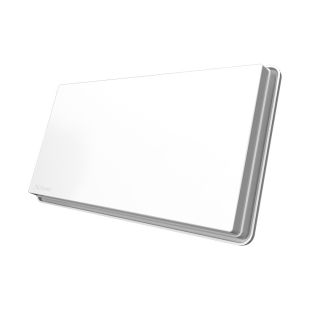
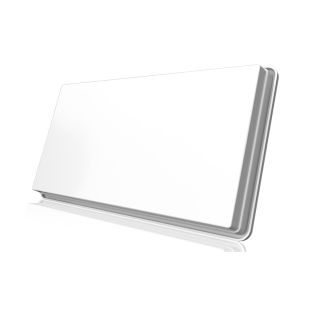
Flat Satellite Antennas
What is that a flat satellite antenna? Unlike satellite dish antennas, flat antennas, as their name suggests, have a flat, more aesthetic shape that allows them to blend in with the building. If you are looking for a discreet antenna for aesthetics, taste or obligation, flat antennas are the best alternative.
These antennas serve to capture the satellite signal like any other, but their shape makes them very discreet to put on facades. Many neighborhood communities do not allow the installation of traditional parabolic antennas due to their size and appearance, but these flat antennas are more concealed and normally in the communities they do not usually cause problems. In any case, check with your community president if he allows you to mount this type of antenna to avoid neighborhood conflicts.

A flat satellite antenna is oriented to the satellite and works in the same way as a regular satellite dish. With the exception that the flat antenna does not have an arm that supports an LNB, but that the entire surface of the antenna performs the capture itself. It also looks straight at the satellite so it will have a slightly more direct orientation to the sky.
Normally flat parabolic dishes are equivalent to 60cm dish antennas, that is, they have the same capture capacity.
The difference between some models and others is the number of cable outputs. If you only have one satellite receiver, you have to choose the SINGLE flat antenna, with only one output. If you have two satellite receivers, you need a TWIN flat antenna with two outputs and you will have to install two cables. And for those who have 3 or 4 outputs, you have to buy the QUAD flat antenna with four universal outputs.
Also, you always need a satellite tuner that will connect to your TV to show you the channels that interest you the most. High definition satellite decoders are now being bought, because HD satellite receivers are cheap and allow you to watch all HD channels on your television.
In the following link you can find an article from our blog where we explain the reasons why you should buy a flat parabolic antenna: