






Great store. Will be my favorite in the future. Sent quickly. All items are brand new sealed. And the prices are very nice. Separately, I want to thank Álex Guerra, who controlled my order from start to finish. In general, you are great!!
Thank you for the service. Absolutely top
Great comms. Very helpful and reliable all along
Order placed packaged well, dispatch and delivered promptly Would use again. Thank you
42/5000 the best team, both human and technical
-
 Cómo detectar y cambiar un latiguillo de fibra óptica: caso práctico
Aprende a localizar un fallo en un latiguillo de fibra óptica, qué revisar antes de sustituirlo, cómo elegir el recambio y cómo comprobar que la instalación vuelve a funcionar.
-
 Cómo instalar una antena Dinova en una caravana o autocaravana paso a paso
Aprende a instalar una antena TDT Dinova en una caravana o autocaravana: material, soporte, alimentación, orientación, comprobaciones y errores frecuentes.
-
 Comelit Ultra: qué ofrece esta gama de videoporteros y cuándo elegirla
Descubre qué ofrece Comelit Ultra, qué módulos existen, en qué se diferencia de una solución básica y cuándo tiene sentido para una vivienda, comunidad o edificio.
-
 Mercusys: qué es, si es buena marca y qué solución WiFi elegir
Mercusys es una marca especializada en equipos de conectividad para hogares y pequeñas oficinas. Su catálogo incluye routers WiFi, repetidores, sistemas WiFi Mesh Halo, dispositivos 4G y 5G, adaptadores, soluciones Powerline y switches. La marca suele [...]
-
 Cómo conseguir mejor cobertura WiFi según tu casa, negocio o instalación
La mala cobertura WiFi no siempre significa lo mismo. En una vivienda puede aparecer en una habitación lejana, en una planta superior o en una zona con muchos obstáculos. En un negocio o una pequeña oficina, [...]
-
 Cómo configurar un TP-Link TL-WA854RE con el ordenador y sin WPS
Cuando un router no tiene botón WPS o la vinculación automática no funciona, todavía es posible configurar un repetidor WiFi desde el ordenador. Ese es precisamente el caso de muchos usuarios que buscan cómo poner en [...]
-
 Cómo instalar un repetidor WiFi paso a paso y qué comprobar después
Instalar un repetidor WiFi parece una tarea sencilla, pero buena parte de los problemas no aparecen en el momento de enchufarlo, sino después: cuando la cobertura apenas mejora, cuando el equipo se conecta pero la navegación [...]
-
 Guía de compra profesional: EAP615-WALL, EAP610EXT y EAP613
EAP615-WALL, EAP610EXT y EAP613: qué punto de acceso elegir según la instalación Cuando una instalación ya pide un punto de acceso más serio, la siguiente duda no suele ser si hace falta un equipo profesional, sino [...]
Coaxial Cable 75ohm (Ω)
The coaxial cable is responsible for transporting the DTT, satellite TV and Radio Frequency signals from the antennas to the receivers.
This route usually includes other intermediate elements such as amplifiers, distribution boxes and TV sockets.
Types of Coaxial Cable and how to choose
* RG6 coaxial: the most common cable, with a diameter of about 6-7mm. It is used for community or individual TV distribution, both DTT and TVSAT. They are available for both indoor and outdoor runs.
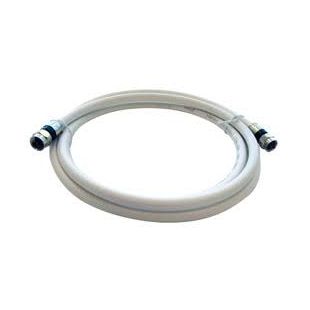
* RG59 coaxial: a smaller diameter cable, about 5mm, and more flexible than RG6. It is mainly used for digital CCTV camera installations with BNC connectors. It is also used for TV distribution in heavily congested areas and is also used in patch cords to connect from the socket to the TV. For short distances, pre-connectorised patch cords can be used.
* RG11 coaxial: a >10mm diameter cable, designed for TV or Data transmission over very long distances. Its thicker conductor offers less loss; on the other hand, they are difficult to handle.
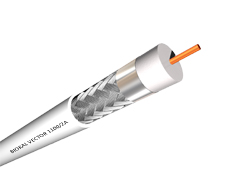
Characteristics of coaxial cables
* LSFH - Halogen free:
Low smoke and flame resistance. LSFH is ideal for ICT installations in blocks and housing estates, as if there is a fire the cable does not burn.
* CPR - Euroclass:
Indicates the level of risk of fire propagation. The lowest and most fire-prone level is class F. The highest and most resistant level is class A. In ICT installations, European regulations require Class D as a minimum
* Exterior - Polyethylene coaxial:
Also called PE coaxial, they are prepared to withstand inclement weather. Generally black in colour.
*Special thickness cables:
10mm thick cables or thin, 5mm cables. The former for large cable runs, and the latter generally for satellite installations or for passing the cable through narrow tubes.
How to avoid interference?
Nowadays, with the arrival of LTE2 and the interference caused by the 4G/5G mobile phone system, coaxial cable has regained its importance, since now more than ever a quality coaxial cable is needed to provide good shielding, which is necessary to deal with installations that suffer from interference.
These cables are usually called class A, class A+ or triple shielded or triple mesh coaxial cables. You can check the price of coaxial cables in our online shop.
Paying too much attention to shielding is of no use if two fundamental things are not taken into account in the installation. On the one hand, connect the elements to ground, which makes the shielding do its job. And on the other hand, use shielded connectors, quality connectors that prevent interference from being introduced through the connector itself.