





Great store. Will be my favorite in the future. Sent quickly. All items are brand new sealed. And the prices are very nice. Separately, I want to thank Álex Guerra, who controlled my order from start to finish. In general, you are great!!
Thank you for the service. Absolutely top
Great comms. Very helpful and reliable all along
Order placed packaged well, dispatch and delivered promptly Would use again. Thank you
42/5000 the best team, both human and technical
-
 Cómo detectar y cambiar un latiguillo de fibra óptica: caso práctico
Aprende a localizar un fallo en un latiguillo de fibra óptica, qué revisar antes de sustituirlo, cómo elegir el recambio y cómo comprobar que la instalación vuelve a funcionar.
-
 Cómo instalar una antena Dinova en una caravana o autocaravana paso a paso
Aprende a instalar una antena TDT Dinova en una caravana o autocaravana: material, soporte, alimentación, orientación, comprobaciones y errores frecuentes.
-
 Comelit Ultra: qué ofrece esta gama de videoporteros y cuándo elegirla
Descubre qué ofrece Comelit Ultra, qué módulos existen, en qué se diferencia de una solución básica y cuándo tiene sentido para una vivienda, comunidad o edificio.
-
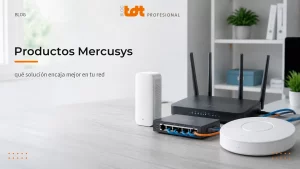 Mercusys: qué es, si es buena marca y qué solución WiFi elegir
Mercusys es una marca especializada en equipos de conectividad para hogares y pequeñas oficinas. Su catálogo incluye routers WiFi, repetidores, sistemas WiFi Mesh Halo, dispositivos 4G y 5G, adaptadores, soluciones Powerline y switches. La marca suele [...]
-
 Cómo conseguir mejor cobertura WiFi según tu casa, negocio o instalación
La mala cobertura WiFi no siempre significa lo mismo. En una vivienda puede aparecer en una habitación lejana, en una planta superior o en una zona con muchos obstáculos. En un negocio o una pequeña oficina, [...]
-
 Cómo configurar un TP-Link TL-WA854RE con el ordenador y sin WPS
Cuando un router no tiene botón WPS o la vinculación automática no funciona, todavía es posible configurar un repetidor WiFi desde el ordenador. Ese es precisamente el caso de muchos usuarios que buscan cómo poner en [...]
-
 Cómo instalar un repetidor WiFi paso a paso y qué comprobar después
Instalar un repetidor WiFi parece una tarea sencilla, pero buena parte de los problemas no aparecen en el momento de enchufarlo, sino después: cuando la cobertura apenas mejora, cuando el equipo se conecta pero la navegación [...]
-
 Guía de compra profesional: EAP615-WALL, EAP610EXT y EAP613
EAP615-WALL, EAP610EXT y EAP613: qué punto de acceso elegir según la instalación Cuando una instalación ya pide un punto de acceso más serio, la siguiente duda no suele ser si hace falta un equipo profesional, sino [...]
What Is Fiber Optic Television and How Does It Work?
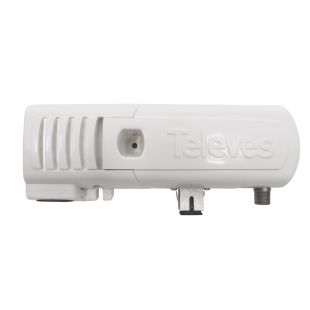
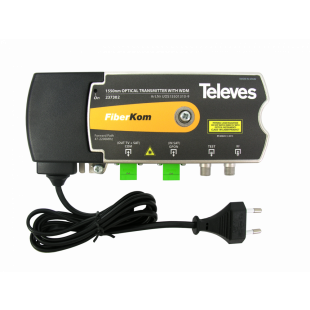
Fiber optic television is an advanced solution for delivering high-quality TV signals with minimal loss and no interference. Unlike coaxial cable, fiber optics transmit data using pulses of light, which allows for longer distances and greater stability. This technology is ideal for buildings, hotels, hospitals, shopping centers, and network operators looking for a centralized and robust TV signal.
Advantages Over Traditional Coaxial Distribution
The main advantage of fiber optic distribution is its ability to transmit signals over long distances without quality loss. Additionally, it is immune to electromagnetic interference, ensuring a stable viewing experience even in industrial or complex environments. Fiber is also lighter and thinner than coaxial cable, allowing for more efficient infrastructure organization.
Available Receivers, Transmitters, and Accessories
In this category, you’ll find everything you need to set up a fiber optic television network:
· Optical receivers –
convert the optical signal into an electrical signal to connect to a TV or coaxial distribution system.
· Optical transmitters –
send the signal from the headend or central source to the various reception points.
· Fiber optic accessories for TV –
including SC/APC connectors, optical splitters, adapters, patch cords, power supplies, and more.
Each component is designed to provide maximum compatibility and performance in professional TV networks.
How to Choose the Right Equipment for Your Setup
When configuring your fiber optic TV network, it's essential to consider:
· Transmission distance
· Wavelength λ in nm (e.g., 1310 nm, 1490 nm, 1550 nm)
· Number of output points (users or TVs)
· Signal type (DVB-T, DVB-C, analog)
· Connector compatibility (SC/APC, FC/UPC, etc.)
Whether you're designing a new installation or upgrading from a coaxial system, our experts can guide you in selecting the best receivers, transmitters, and accessories to suit your needs.